

Eco-Tourism Activity: Discover and Respect Alpine Wildlife in Cervino Ski Paradise
Eco-Tourism Activity: Discover and Respect Alpine Wildlife in Cervino Ski Paradise
Cervino Ski Paradise offers its visitors a unique experience that combines the joy of skiing with respect for Alpine biodiversity. Through a dedicated eco-tourism activity, our goal is to raise awareness and actively involve visitors in environmental protection.
Eco-Sustainable Actions
As part of the Cervino Ski Paradise experience, we offer our guests the opportunity to explore a protected Alpine environment and learn about the initiatives we are implementing to preserve it, including:
- Minimizing impacts on local ecosystems, with particular attention to Alpine grouse species.
- Creating quiet zones for wildlife, essential areas for the rest and reproduction of vulnerable species.
- Clearly marking aerial cables with birdmark devices, helping to reduce the risk of bird collisions.

Discover the Species of Alpine Wildlife
During your stay in our resort, you will have the opportunity to discover some of the key species that inhabit our territory. Here are some of the ambassadors of our biodiversity:
- Black Grouse (Tetrao tetrix)
This extraordinary bird digs tunnels beneath the snow to conserve energy and protect itself from predators.
 The Black Grouse inhabits open forests with rich undergrowth dominated by rhododendrons and blueberries. In the Aosta Valley, the species can mainly be observed between 1,700 and 2,200 metres above sea level. The male’s call can mostly be heard at dawn, regularly from April to June.
Did you know…
In winter, due to the cold and the difficulty of moving around, animals consume a great deal of energy while food resources become scarce. To survive, they must therefore adopt special strategies. The Black Grouse digs tunnels under the snow, where temperatures remain constant, providing shelter from the cold and predators, sometimes for entire days. If suddenly disturbed, it is forced to flee, often using up the energy necessary for its survival.
- Rock Ptarmigan (Lagopus muta)
A true master of seasonal camouflage, it changes its plumage to adapt to the Alpine seasons.
 The Rock Ptarmigan can only be observed above the tree line, in areas alternating between Alpine meadows, scree slopes, rocky ridges and snowy valleys. In winter, it prefers windy ridges where snow cover is thinner, making vegetation easier to find. Its song can mainly be heard in April, May and June during the first hours of daylight.
Did you know…
The Rock Ptarmigan is considered a “glacial relict”: it reached our latitudes during the Ice Ages and later found refuge on high mountain ranges during warmer periods, where it still finds an environment similar to its original tundra habitat. Its plumage, extremely soft and dense, also covers its feet — an adaptation for walking and resting on snow and ice — as well as its nostrils, helping to warm inhaled air. The feathers contain a large amount of air, providing excellent thermal insulation. Resting in shelters dug into fresh snow also helps reduce heat loss during the night and in harsh weather conditions.
-
Chamois (Rupicapra rupicapra)
 The Chamois mainly lives between 1,500 and 2,800 metres above sea level in areas with rocky outcrops. Pastures and forests, especially in winter, are also important habitats for the species. When alarmed, it emits a long whistle produced by expelling air through its nostrils, while bleating is the typical call exchanged between mothers and their young.
Did you know…
The Chamois is able to move across extremely steep and rugged terrain thanks to the unique structure of its hooves. The hard outer edge allows it to grip tiny rocky ledges, while the softer underside improves adhesion to surfaces. The two hoof toes can spread apart and are connected by an elastic membrane, increasing the contact surface and making movement on snow easier.
- Mountain Hare (Lepus timidus)With furry paws and a coat that changes colour, it is perfectly adapted to life in the high mountains.
 The Mountain Hare inhabits Alpine meadows and rocky slopes at very high altitudes. During winter, it descends into forests or near the upper forest limit. Usually silent, it emits sharp cries only when seriously threatened. As a form of social communication, it performs a drumming behaviour by repeatedly striking the ground with its hind legs.
Did you know…
The Mountain Hare is known for its remarkable seasonal transformation: in winter, its coat becomes completely white except for the black-tipped ears. Hair also covers the underside of its paws, increasing the contact surface and making movement across snowy terrain much easier.
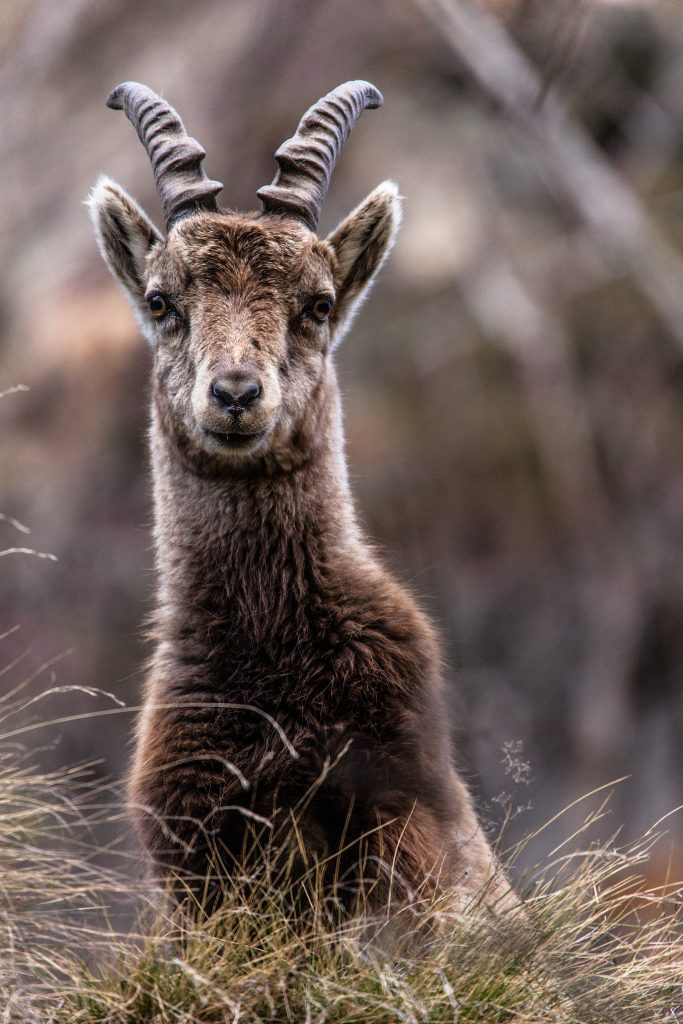
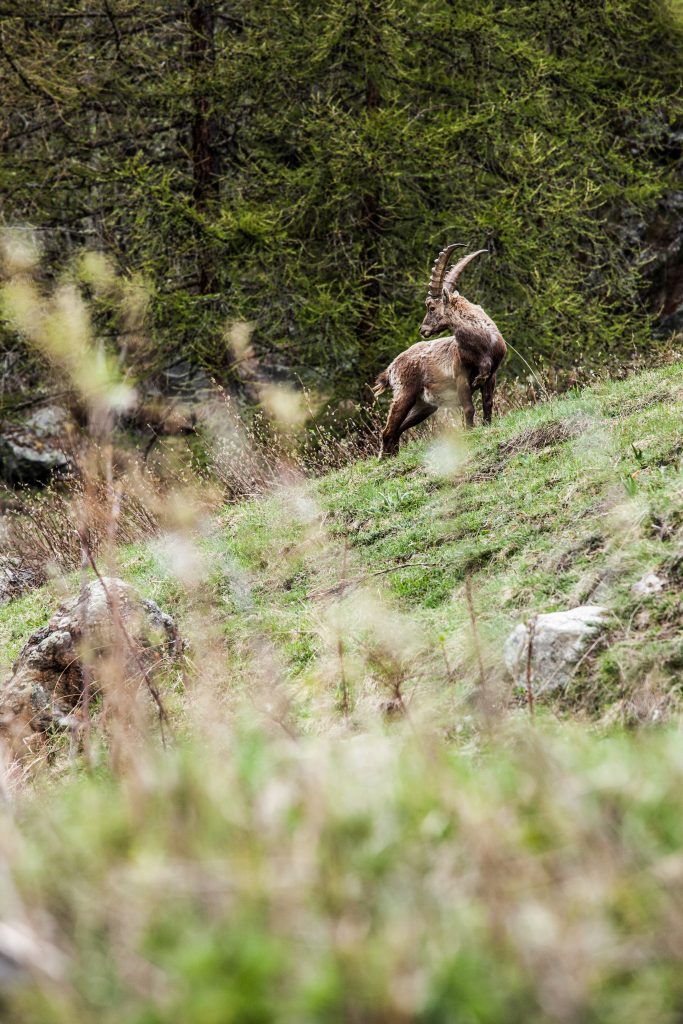
- Alpine Ibex (Capra ibex)
Master of rocky cliffs, it is a symbol of resilience and adaptation. The Alpine Ibex is particularly adapted to environments characterised by rocky outcrops mixed with Alpine grasslands, extending up to glacier boundaries. When alarmed, it emits a whistle produced by expelling air through its nostrils, while bleating is the typical call between females and their young.
Did you know…
The Aosta Valley is the only region in the Alpine arc where the species was never completely exterminated in historical times. Populations elsewhere were gradually wiped out, except for a few dozen individuals surviving in the Gran Paradiso massif. In the early 1800s, hunting of the Alpine Ibex was banned there, and in 1856 the Royal Hunting Reserve was established, later becoming a National Park. Thanks to reintroduction projects and natural migrations, all current Alpine Ibex populations across the Alps descend from this single native group of Gran Paradiso.
New for 2024: Marked Areas on the Skirama
Starting this year, the Cervino Ski Paradise skirama will feature marked areas with the message: “Respect Wildlife.”

These areas have been designed to protect vulnerable species and raise visitors’ awareness about the importance of respectful behaviour. By taking part in this activity, you can actively contribute to the protection of the Alpine environment.
How to Experience the Resort
During your stay at Cervino Ski Paradise, you will be able to enjoy a complete eco-tourism experience thanks to:
- Interactive maps guiding you through the protected areas of the resort.
- Informational signage along the routes, with details about the species and their habitats.
- Educational material available on the official app and at information points to help you learn more about Alpine biodiversity.
Scientific Collaborations
This initiative is carried out with the support of experts who help us ensure the protection of Alpine biodiversity:
- Dr. Ivana Grimod, biologist specialised in Alpine wildlife, contact: igrimod@libero.it
- Dr. Matteo Martinet, agronomist and wildlife technician, specialist in wildlife and environmental management, contact: matteomartinet@gmail.com
A Commitment for the Future
Cervino Ski Paradise invites all its guests to share a deep respect for Alpine nature. Thanks to your participation, we can continue to maintain a balance between winter activities and environmental protection.
Join us in this unique experience and help us preserve the beauty of our resort for future generations!
Follow our adventures on Cervino Ski Paradise social media
Stay updated with our latest news
Sign up for the newsletter

P.IVA 00041720079 - REA Aosta:23540
Capitale Sociale: Deliberato € 54.600.546.00
Sottoscritto e versato € 54.600.546,00

©Cervino S.p.A - 2026